How much time should it actually take to design effective training and learning content?
By 2026, generative AI has significantly accelerated the production of instructional materials. Tasks that previously required multiple tools and extended preparation time, such as outlining lesson plans, producing training videos, and designing assessments, can now be completed within a single workflow. What once demanded coordinated effort across drafting, recording, editing, and formatting has become far more streamlined.

While increasing production speed is relatively simple, ensuring coherence across modules, sustaining learner engagement, and producing measurable outcomes remains significantly more complex.
Below are five AI tools for creating training materials in 2026, evaluated by how they support educators, trainers, and course creators.
1. ChatGPT
ChatGPT has become a common starting point for AI-assisted content creation.
Its strength lies in flexibility and speed. Educators use it to draft lesson plans, generate quizzes, rewrite explanations for different learner levels, and build discussion prompts. Corporate trainers use it to transform internal documentation into structured training scripts.
Common use cases include:
- Converting long policy documents into digestible training material
- Generating scenario-based learning exercises
- Creating practice questions aligned to learning objectives
ChatGPT is powerful in the early stage of course development. It reduces the cognitive load of starting from scratch.
However, it does not manage structure. It does not know your cohort, your grading system, or your learning analytics. Everything created must be exported and integrated manually into other systems.
ChatGPT accelerates content thinking. It does not provide a connected teaching and training workspace.
Best for: drafting and ideation
Limitation: detached from structured learning systems
2. Synthesia
Video remains one of the most effective training formats in corporate environments.
Synthesia reduces the need for cameras, studios, or video editors. Trainers write a script, select an AI presenter, and generate videos in multiple languages.
This is particularly valuable for:
- Global onboarding programs
- Compliance rollouts
- Standardized training across distributed teams
For multinational organizations, the ability to produce consistent training content at scale is transformative.
However, Synthesia focuses on production efficiency. It does not design learning paths, embed adaptive assessments, or track long-term learner performance.
It solves the delivery format. It does not solve instructional structure.
Best for: scalable corporate video training
Limitation: production tool rather than a full course system
3. Canva Magic Studio
Visual clarity directly impacts comprehension.
Canva Magic Studio enables instructors to generate slide decks, structured presentations, diagrams, and worksheets quickly using AI prompts. For educators without design expertise, this dramatically improves the professional quality of materials.
In technical subjects such as programming or finance, visual structure reduces cognitive overload and supports concept retention.
Canva excels at:
- Turning outlines into polished presentations
- Creating visual summaries of complex ideas
- Producing worksheets and interactive handouts
However, Canva operates at the presentation layer. It does not manage enrollment, track assessment performance, or analyze learner progress.
It strengthens delivery aesthetics, not instructional architecture.
Best for: visual content creation
Limitation: no learner management or analytics layer
4. Articulate 360

Articulate 360 remains a strong choice for structured enterprise training environments.
It enables the creation of interactive modules with branching logic, embedded assessments, and LMS integration. In regulated industries, this level of tracking and documentation is critical.
Its strengths include:
- SCORM-compliant exports
- Structured compliance training modules
- Interactive simulations
Articulate is particularly suited for organizations that require formal reporting and integration with existing LMS systems.
The tradeoff is complexity. Teams typically need trained instructional designers and established workflows. It is powerful, but less agile for small teams or rapidly evolving programs.
Best for: enterprise learning departments
Limitation: higher setup complexity and operational overhead
5. TutorFlow
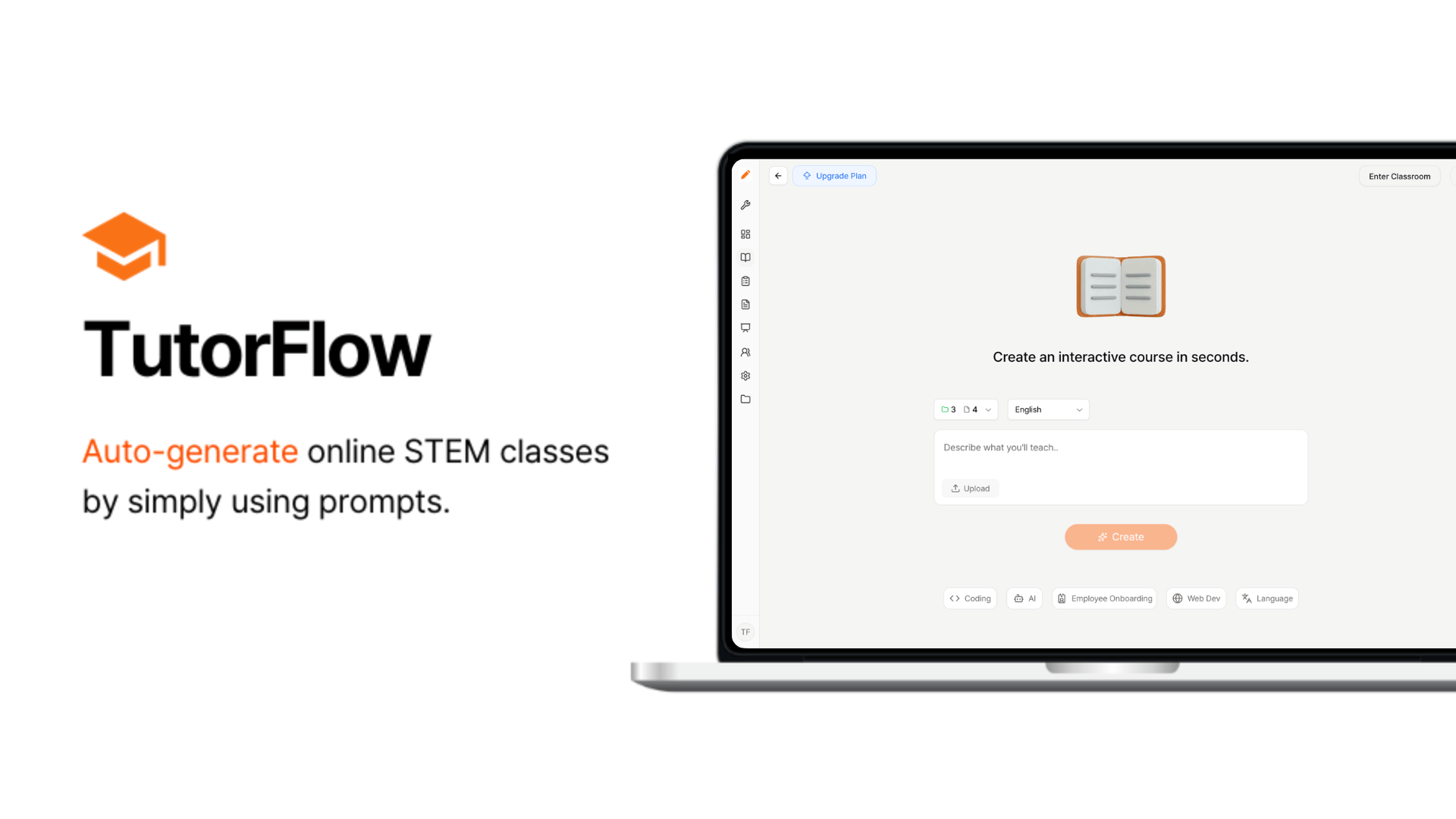
Most AI tools generate isolated pieces of content.
TutorFlow approaches training as a connected system.
Instead of drafting in one tool, designing in another, uploading to an LMS, and analyzing performance elsewhere, TutorFlow integrates course generation, assessments, cohort management, and analytics within one platform.
Instructors can:
- Generate structured modules aligned with objectives
- Build quizzes directly inside the system
- Manage learners and cohorts over time
- Analyze performance trends using AI insights
- Support technical formats such as coding and mathematics
This integration becomes especially valuable for recurring programs such as university courses, bootcamps, or structured corporate initiatives.
Over multiple cohorts, data accumulates. Insights improve. Courses evolve.
TutorFlow embeds AI across the educator's authoring, delivery, and review workflow, not just the drafting stage.
Best for: structured and scalable teaching and training programs
Limitation: requires thoughtful setup to maximize long-term value
Structural Comparison
| Tool | Primary Strength | Structural Depth |
|---|---|---|
| ChatGPT | Content generation | Low |
| Synthesia | AI video production | Low |
| Canva | Visual presentation | Low |
| Articulate 360 | Enterprise module development | High |
| TutorFlow | Connected teaching and training workflow | High |
Choosing Strategically in 2026
By 2026, content generation is no longer a distinguishing capability, as nearly every major platform offers some form of AI-assisted drafting. The more meaningful distinction lies in whether a system connects content, assessment, and learner progression into a coherent structure.
If the objective is simply to produce materials more quickly, standalone generative tools are often sufficient. However, if you are responsible for:
- Measurable learning outcomes
- Longitudinal learner development
- Scalable program delivery
- Continuous performance insight
then an integrated approach becomes strategically stronger.
The next phase of AI in training will therefore be defined less by output volume and more by the ability to connect content, delivery, assessment, and review in a workflow that sustains quality over time.
For educators and teams looking to move beyond isolated content generation and toward structured, data-informed course design, exploring a unified AI-powered platform such as TutorFlow may be a practical next step.
Explore TutorFlow and start building structured courses and training materials.