What happened
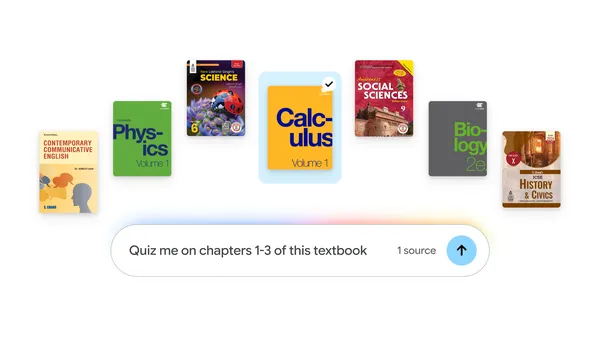
Google for Education announced that students can now access hundreds of textbooks from U.S. and Indian providers, including OpenStax, Open Textbook Library and S Chand Publishing, in Gemini Notebook at no charge. Google says the tool generates textbook-grounded answers with inline citations and source links, alongside tailored study guides, practice quizzes and flashcards.
Why it matters
For educators and instructional designers, the practical question is whether the available catalog matches assigned materials and learning objectives. Google presents this as an available feature, not a future release. Its citation claim offers a specific point to check: whether generated answers accurately reflect the cited passages. The announcement describes study-support functions, but provides no evidence of improved learning outcomes or independent assessment of answer accuracy.
What to do next
Check the catalog through the notebook’s “Add sources” and “Textbooks” options before incorporating it into a course. Review a small sample of generated answers, quizzes and flashcards against the original textbook and your instructional goals. Ask students to verify citations rather than treat generated material as authoritative. Leaders considering broader use should seek details on institutional requirements and data handling, which this announcement does not address.
About this briefing
Reviewed by TutorFlow Editorial. We link the primary source, preserve its publication date, and distinguish reported claims from TutorFlow analysis. Our commentary focuses on practical decisions for educators and training teams.
Discussion (0)
Open to everyone