What happened
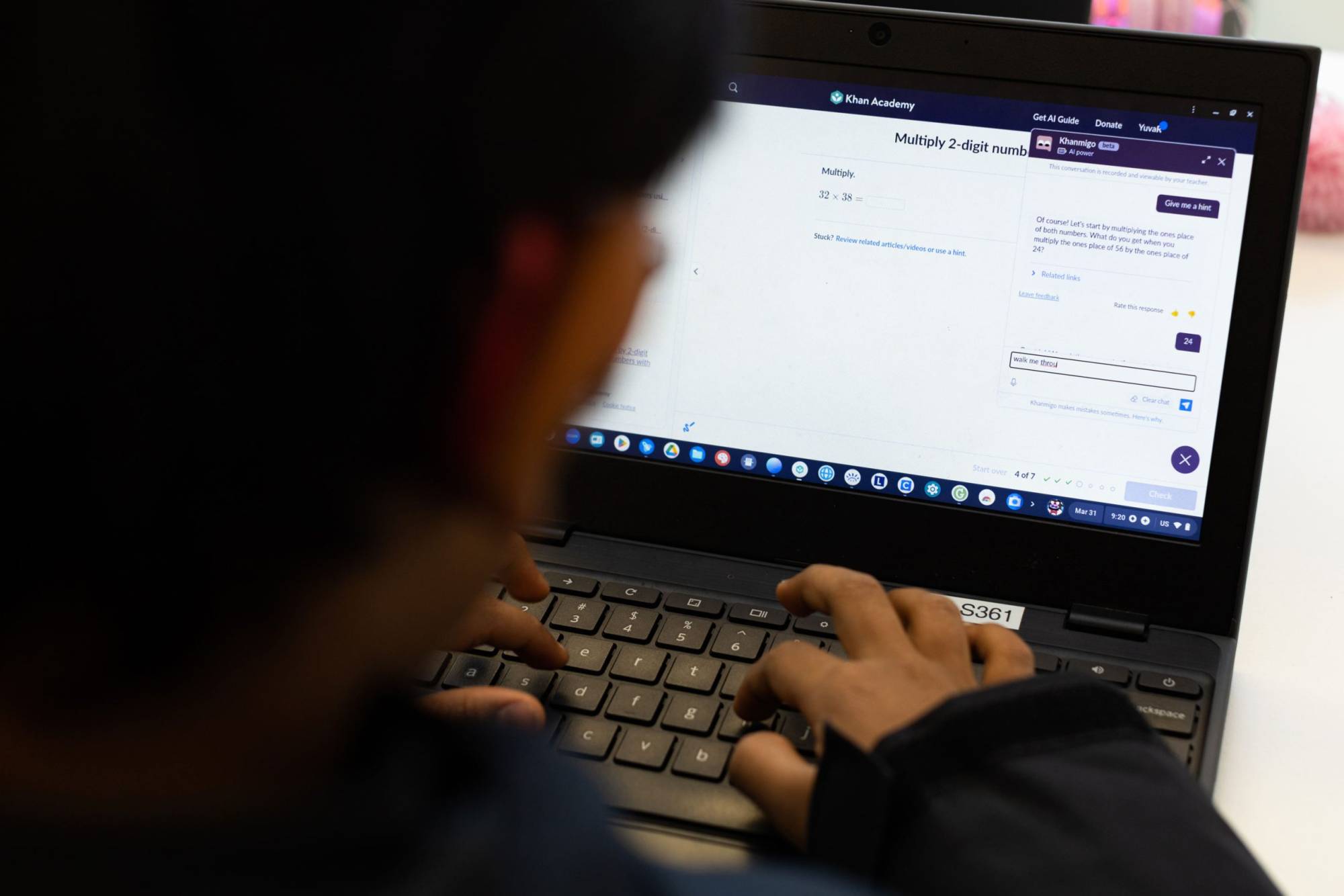
MindShift, carrying Hechinger Report reporting, says University of Toronto researchers Philip Oreopoulos and Nina Low followed students in 18 Tennessee middle schools from 2024 to 2026 in a randomized trial of Khan Academy with Khanmigo available for low-achieving students in remedial math. Their NBER-circulated draft found students tried Khanmigo early but “not much” thereafter; Khan Academy users outperformed usual remediation, but gains were modest and no greater than prior Khan Academy practice without AI.
Why it matters
For educators and designers, the result separates platform practice from AI tutoring. A Socratic bot that withholds answers may align with instructional theory, but the study reports that many students wanted answers and largely stopped using it when offered hints or questions. That makes engagement, workflow placement, and incentives part of the learning design, not adoption details. It also cautions leaders against treating an AI assistant as added value unless usage and learning outcomes are measured separately from the surrounding curriculum.
What to do next
If piloting AI tutors, compare them with existing non-AI practice and usual remediation, track when learners ask for help, abandon help, or retry after errors, and gather teacher observations. Build support after mistakes, where Khan Academy now says Khanmigo automatically appears, but treat that redesign as unproven for learning until evaluated. Sal Khan said Khan Academy saw low engagement internally and is experimenting with credit for bot-assisted redos; schools should document local effects before scaling or turning such features on broadly.
About this briefing
Reviewed by TutorFlow Editorial. We link the primary source, preserve its publication date, and distinguish reported claims from TutorFlow analysis. Our commentary focuses on practical decisions for educators and training teams.
Discussion (0)
Open to everyone